Post
How To Make Perfume Last All Day
May
Mastering the Art of Fragrance Longevity: How To Make Perfume Last All Day
1. The Biological Canvas: Hydration and Lipid Retention
The single greatest enemy of perfume longevity is not the quality of the scent, but dry skin. In 2026, we view the skin as a “living sponge.” If the sponge is dry, it will aggressively drink whatever liquid is applied to it—including the precious oils in your perfume—causing the scent to “collapse” into the skin rather than radiating from it.
The “Moisture Barrier” Strategy
The Thirsty Skin Trap: When skin is dehydrated, it seeks moisture to repair its barrier. If you apply perfume to dry skin, the skin absorbs the alcohol and oils too quickly, effectively “eating” the top and heart notes before they have a chance to bloom.
The Scent Sandwich: The most effective 2026 technique is applying an unscented, ceramide-rich lotion or a specialized “fragrance primer” before you spray. This creates a lipid barrier that sits between your skin and the perfume, forcing the fragrance molecules to stay on the surface where they can evaporate slowly and evenly.

How To Make Perfume Last All Day Timing the Application: Apply your fragrance immediately after showering and moisturizing. Your pores are slightly open from the heat, and the dampness of the lotion provides a “tacky” base that acts like a molecular anchor for the perfume.

2. Strategic Topography: The Thermodynamics of Pulse Points
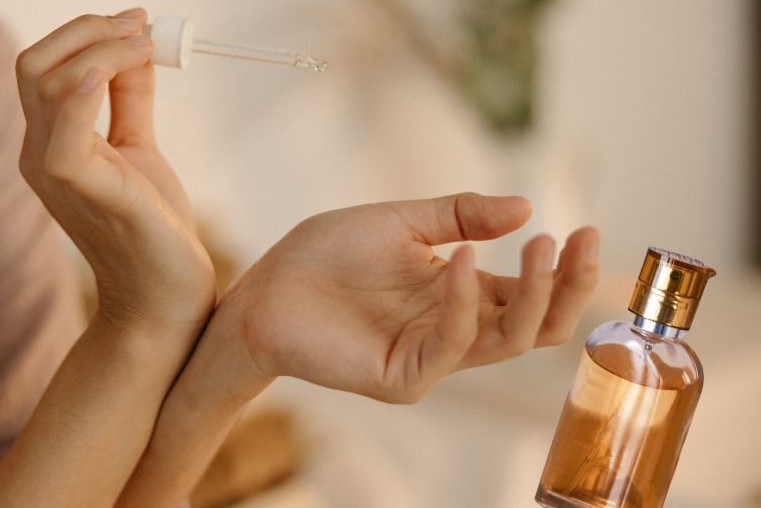
Where you apply your perfume is a matter of biological engineering. We use “pulse points” not because they are traditional, but because they are the body’s natural radiators.
The Heat Map
Pulse points are areas where the blood vessels are closest to the skin’s surface, creating localized zones of higher temperature. This heat acts as a micro-diffuser, slowly warming the fragrance oils and pushing them into the air.
Traditional Points: The wrists and the sides of the neck remain the gold standard.
The “Hidden” Radiators: In 2026, experts recommend the inside of the elbows and behind the knees. These areas generate consistent heat and are often protected by clothing, which helps “trap” the scent and release it slowly throughout the day.
The Cardinal Sin—The Friction Mistake: A near-universal error is rubbing the wrists together after spraying. This creates “kinetic friction” that generates excessive heat. This heat doesn’t just warm the scent; it shears the molecular bonds of the delicate top notes (like citrus and light florals), effectively “killing” the opening of the fragrance and shortening its overall life.
3. The Science of Concentration: Choosing Your Weapon
In 2026, the savvy consumer is a “Skintellectual” of scent, choosing concentrations based on the specific demands of their schedule. The longevity of your perfume is largely determined by its oil-to-solvent ratio.
The 2026 Concentration Table
| Type | Concentration | Longevity | Best Use Case |
| Eau de Toilette (EdT) | 5% – 15% | 3 – 5 Hours | The Gym, Quick Errands, High Heat |
| Eau de Parfum (EdP) | 15% – 20% | 6 – 9 Hours | The Office, Daily Signature |
| Parfum / Extrait | 20% – 40% | 10 – 14 Hours | Formal Events, Winter, Long Travel |
Molecular Weight Matters
Beyond concentration, the Note Architecture determines endurance.
Light Molecules: Citrus (Lemon, Bergamot) and Ozone notes are small and volatile; they evaporate quickly regardless of concentration.
Heavy Molecules: Woody, Musky, Vanilla, and Amber notes are “heavyweight” molecules. They have a lower vapor pressure and “cling” to surfaces. If you need a fragrance that lasts through a 12-hour shift, look for a base-heavy composition.
4. Advanced Layering: Building the “Scent Foundation”
For the professional navigating a high-stakes environment, “one-and-done” spraying is often insufficient. 2026 trends favor Fragrance Layering to create a multi-dimensional “aura.”
The “Same-Line” Boost: Using a body wash and a body cream from the same fragrance line creates a base layer of scent. This ensures that even if the top notes of your spray fade, the “DNA” of the fragrance remains embedded in your skin’s lipid layer.
Alternative Carriers—Hair and Fabric: * The Hair Cloud: Hair is significantly more porous than skin and acts as a brilliant fragrance carrier. However, avoid spraying directly to prevent alcohol damage. Instead, spray your hairbrush or use a dedicated “Hair Mist” that contains nourishing oils.
The Fabric Anchor: Synthetic fibers and cotton are excellent at holding onto scent molecules because they don’t generate the same metabolizing heat as skin. A light mist on a scarf or the lining of a jacket can keep a scent detectable for days. (Note: Always test for staining on a hidden area first).
5. Environmental Archiving: Protecting Your Investment
You can master application, but if your perfume has “spoiled” in the bottle, it will never perform. Fragrance molecules are delicate organic compounds that are susceptible to oxidation.
The Three Enemies: Heat, Light, and Humidity.
The “Bathroom Trap”: Storing perfume in the bathroom is the quickest way to ruin it. The constant fluctuations in humidity and temperature “cook” the delicate oils, causing the scent to turn sour or lose its potency within months.
The Optimal Archive: Keep your collection in a cool, dark drawer or its original box. In 2026, high-end collectors even use dedicated “fragrance fridges” set to a constant 12°C to 15°C to preserve the integrity of the juice for years.
6. The Psychological and Social Impact of Longevity How To Make Perfume Last All Day
In the modern world, scent longevity is about more than vanity; it is about consistency of character. * Sustained Confidence: A scent that fades by lunch can leave you feeling “unfinished.” Maintaining your olfactory signature throughout the day acts as a psychological anchor, keeping you in a state of “ready” for whatever comes next.
The “Sillage” Impression: In social and professional circles, a long-lasting (but subtle) scent creates a memorable “trail.” It suggests a person who is intentional, detail-oriented, and meticulous about their personal presentation.
Neuro-Olfactive Benefits: Modern functional fragrances are designed to trigger specific brain states—like “Focus” or “Calm.” When the fragrance lasts, these cognitive triggers remain active, helping you maintain emotional resilience throughout a stressful day. How To Make Perfume Last All Day
Conclusion: The Invisible Signature
Mastering perfume longevity is a blend of scientific discipline and artistic flair. By prioritizing skin hydration, strategically selecting your pulse points, and understanding the molecular weight of your favorite notes, you move from being a casual user to a Master of Olfactory Presence. How To Make Perfume Last All Day
In 2026, your fragrance How To Make Perfume Last All Day is your invisible business card. It shouldn’t just be an “opening act” that disappears; it should be a consistent, elegant narrative that tells your story from your first morning coffee to your last evening event. Whether you prefer a crisp, minimalist aquatic or a deep, luxurious amber, these techniques ensure that your signature remains as unshakeable and vibrant as you are.
