Post
1. Difference Eau de Parfum and Eau de Toilette
May
Concentration and Character: Difference Eau de Parfum and Eau de Toilette
In the golden age of “Olfactory Evolution,” fragrance has transcended being a mere grooming habit. In 2026, we view scent as a dynamic layer of our identity, a tool for cognitive focus, and a silent communicator of our presence. However, one of the most persistent sources of confusion for consumers remains the technical nomenclature on the bottle: Eau de Toilette (EdT), Eau de Parfum (EdP), and Parfum.
Understanding these terms is not just about knowing how long a scent will last. It is about understanding the architecture of the scent itself. A higher concentration doesn’t just mean “louder”—it often means a different emotional experience entirely. This guide will dismantle the myths and provide the technical clarity you need to navigate the world of high-perfumery with confidence.
1. The Anatomy of an Aroma: Understanding Concentration
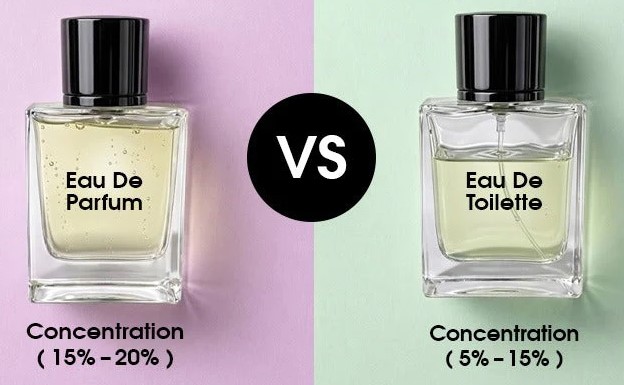
At its core, a fragrance is a blend of perfume oil (essential oils, synthetic molecules, and resins) and a solvent (usually high-grade ethanol and a touch of water). The label on the bottle—EdT, EdP, etc.—tells you the percentage of perfume oil in that mixture.
The 2026 Concentration Spectrum
| Fragrance Type | Oil Concentration | Average Longevity | Primary Vibe |
| Eau de Cologne (EdC) | 2% – 5% | 2 Hours | Refreshing, fleeting, “Zesty” |
| Eau de Toilette (EdT) | 5% – 15% | 4 – 6 Hours | Bright, radiant, “The Daily Driver” |
| Eau de Parfum (EdP) | 15% – 20% | 8 – 10 Hours | Rich, structured, “The Signature” |
| Parfum / Extrait | 20% – 40% | 12+ Hours | Dense, intimate, “The Luxury Peak” |
2. Eau de Toilette: The “Radiant” Daily Companion
The term “Toilette” comes from the French phrase faire sa toilette, meaning “to get ready.” In 2026, EdT remains the most popular choice for daytime wear and professional environments.
The Focus on Top Notes
Because Eau de Toilette has a higher alcohol-to-oil ratio, the alcohol evaporates more quickly. This creates a “burst” effect. EdTs are designed to showcase the Top Notes—the citrus, the herbs, and the bright, ozonic molecules.
The Sillage Factor: EdTs often have a higher projection (the distance the scent travels) in the first hour than an EdP. Because the formula is lighter, the molecules “jump” off the skin more readily.
Best For: The office, the gym, or outdoor summer gatherings. It is the “morning espresso” of the fragrance world—designed to wake up the senses without overstaying its welcome.
3. Eau de Parfum: The “Structured” Soul
In 2026, Eau de Parfum has become the industry standard for those seeking Emotional Perfumery. With a concentration often reaching 20%, EdPs are built to tell a longer, more complex story.
The Heart of the Matter
While an EdT is about the “hello,” an EdP is about the conversation. Once the top notes settle after 30 minutes, the Heart Notes (the florals, spices, and fruits) take center stage.
The Complexity: EdPs have a slower evaporation rate, allowing the perfumer to use heavier, more expensive molecules that require time to “bloom” on the skin.
The 2026 Shift: Modern EdPs are now formulated with “linear” technology, meaning the scent you smell in the first hour stays remarkably consistent into the eighth hour. This is the choice for the person who wants a “Signature Scent” that follows them from a morning meeting to an evening dinner.
4. Parfum and Extrait: The “Intimate” Luxury
This is the highest concentration available. In the era of “Quiet Luxury,” Parfums have seen a massive surge in 2026. They are not about filling a room; they are about inviting someone in.
Depth Over Distance
A common misconception is that a Parfum is “louder” than an EdT. In reality, it is often the opposite. Because the oil concentration is so high (up to 40%), there is less alcohol to carry the scent away from your body. Difference Between Eau de Parfum and Eau de Toilette
The “Scent Bubble”: A Parfum creates an intimate aura. It stays close to the skin but lasts for an incredible duration—sometimes even through a shower. Difference Between Eau de Parfum and Eau de Toilette
The Base Note Dominance: These formulas lean heavily on Base Notes like sandalwood, oud, vanilla, and amber. They are thick, syrupy, and incredibly rich.
The Evening Statement: Use an Extrait when you want to feel grounded and luxurious. It is the olfactory equivalent of a bespoke velvet blazer.
5. The “Composition” Myth: It’s Not Just About Strength Difference Between Eau de Parfum and Eau de Toilette
One of the most important lessons in 2026 perfumery is that an EdP is often a different recipe than an EdT of the same name.
Brands frequently tweak the ingredients to suit the concentration. For example:
The EdT version might have more Bergamot and Grapefruit to enhance the freshness.
The EdP version might swap the citrus for more Rose and Patchouli to add “weight.”
The Parfum version might add a touch of Leather or Incense to provide a “darker” mystery.
Gemini Insight: Never assume an EdP is just a “stronger” version of the EdT you like. Always test both on your skin. The chemistry of the EdP might emphasize notes that your skin doesn’t agree with, or vice versa!
6. Sillage vs. Projection: The Science of the “Trail” Difference Between Eau de Parfum and Eau de Toilette
In 2026, fragrance enthusiasts differentiate between Projection (how far the scent reaches while you stand still) and Sillage (the lingering trail you leave behind when you walk).
EdTs usually have high projection but low sillage (they vanish quickly).
EdPs offer a balance of both.
Parfums have low projection but high sillage (the scent hangs in the air like a ghost). Difference Between Eau de Parfum and Eau de Toilette
7. Strategic Application: Making It Last in 2026
To get the most out of your chosen concentration, your application technique must match the molecular weight of the product.
The “Pulse Point” Principle
For EdPs and Parfums, heat is your friend. Apply to the inner wrists, the base of the throat, and—most importantly—behind the knees. As you move, the friction and heat “activate” the heavy oils.
The “Scent Sandwich” (A 2026 Hack)
Tying into our “Circadian Skincare” philosophy:
Hydrate: Apply an unscented, ceramide-rich lotion to your skin first. Dry skin “drinks” fragrance oils, making the scent disappear.
Spray: Apply your EdP while the lotion is still slightly tacky.
Trap: For maximum longevity, spray your fragrance before you put on your clothes. This allows the oils to bond with your skin’s natural lipids.
8. Occasion and Lifestyle: The “Scent Wardrobe” Difference Eau de Parfum and Eau de Toilette
In 2026, we advocate for a Fragrance Wardrobe. Just as you wouldn’t wear a tuxedo to the gym, you shouldn’t wear a heavy Oud Parfum to a spin class.
For the Traveler: EdTs are perfect. They are refreshing during long flights and won’t overwhelm your seatmate in the “cabin-pressure” environment.
For the Romantic: An EdP or Parfum is essential. These concentrations bloom beautifully during the warmth of a dinner or a close-proximity encounter.
For the Professional: Stick to “Minimalist” EdTs or “Clean” EdPs. In the 2026 professional world, “scent-free” zones are common; a light, airy concentration shows respect for shared space while maintaining your personal aura. Difference Eau de Parfum and Eau de Toilette
9. The Digital Discovery: Navigating Online Purchases
With the rise of “Perfume-Tok” and AI-driven fragrance finders, many are buying scents without smelling them first.
Look at the “Notes Pyramid”: If the Top Notes are mostly citrus and the concentration is EdT, expect a 4-hour lifespan.
Look for “Resinous” Base Notes: If an EdP lists Labdanum, Amber, or Musk at the base, it is likely a “heavy hitter” that will last 10+ hours.
10. Storage: Protecting Your Investment
In 2026, we know more about molecular degradation than ever.
The Enemies: Light, Heat, and Oxygen.
The Solution: Never store your fragrance in the bathroom (humidity is a killer). Keep your high-concentration EdPs and Parfums in their original boxes or a dark, cool drawer. A well-stored Parfum can last for decades; a poorly stored EdT can go “rancid” in two years.
Conclusion: Empowering Your Olfactory Identity
Ultimately, understanding the technical differences between Eau de Parfum and Eau de Toilette is not about following a set of “dos and don’ts.” Instead, it is about empowering yourself to make better choices based on your unique lifestyle, the occasion at hand, and your personal olfactory preferences.
In this era of Olfactory Evolution, we no longer settle for “generic” beauty. We seek out the strong, luxurious profile of an amber Eau de Parfum when we need to feel powerful, and we embrace the crystalline clarity of an aquatic Eau de Toilette when we seek freedom.
Whether you are looking for a subtle daily companion or a bold evening statement, the right concentration ensures your fragrance experience is as comfortable as it is memorable. Your scent is the final word in your personal narrative—make sure it’s spoken in the right volume.
